
Stash Hub Blog
Places to Sell Fabric Online
11 June 2026
Woohoo, you’ve made the decision to clear out some fabric, which is such an important part of your journey towards falling in love with your stash! The next step is working out where to sell it.
There are lots of online options, from big marketplaces with huge audiences to smaller, more sewing-focused communities. The best place to list your fabric will depend on where you live, how much time you want to spend managing listings, and whether you’d rather post parcels or arrange local collections.
Here are some of the best places to sell fabric online:
1. eBay
eBay is a well-known option with a huge audience, so it can be a good place to sell fabric if you want to reach buyers beyond your existing followers.
Countries available: eBay is available in 190 countries worldwide. There are localised platforms for different countries, but you can also open up your listings to international buyers by offering worldwide shipping.
How it works: You can create auction-style listings or set a fixed price, depending on whether you want to encourage bidding or keep things simple. In the UK, eBay’s Simple Delivery can also make posting easier by providing prepaid labels or QR codes for eligible listings.
Things to consider: eBay has a huge audience, but it is not sewing-specific, so good titles, clear photos and detailed descriptions really matter. Include the fabric type, fibre content, length, width, condition, colour, weight, stretch and any flaws. It’s also worth checking similar sold listings before pricing your fabric. Seller fees vary between countries, so be aware of potential fees before creating your listings.
2. Vinted
Did you know there’s now a fabric category on Vinted? Originally developed as a platform to sell secondhand clothes, you can now sell all kinds of things on Vinted. There is a strong algorithm that helps connect your listings with potential buyers.
Countries available: Vinted is available in the UK, US and many European countries, although features and cross-border selling options can vary depending on where you are based.
How it works: Download the Vinted app and tap the plus button to create your first listing. Add your photos, details and select the category Hobbies & collectables > Arts & crafts > Sewing, knitting & needlecraft > Fabric. There are no selling fees for private sellers and buyers usually pay the postage.
Things to consider: Vinted is easy to use, but it can also be very tempting to browse while you list, so don’t be surprised if you end up restashing as well as destashing! As with any selling platform, clear photos and accurate details are important. Include measurements, fibre content, condition and any imperfections so buyers know exactly what they’re getting.
3. Destasher
Destasher is a new UK-based destashing platform focused on community. The entire platform is dedicated to helping sewists and yarn crafters rehome surplus materials, including fabric, patterns, notions and other creative supplies. You can also find out more about Destasher’s founder Caroline and her plans for the platform in her recent episode of the Check Your Thread podcast.
Countries available: UK only.
How it works: Join the Destasher community and create your profile with your crafting interests. List your leftover fabric, yarn and crafting supplies. You can choose whether to sell them or give them away for free if you’re just hoping to send them to a good home. Buyers and sellers can privately message each other to arrange shipping or collection. Payments are handled via Stripe and released once the buyer has confirmed receipt.
Things to consider: Destasher is newer than platforms like eBay or Vinted, so the audience may be smaller, but it is much more focused. That can be a real advantage if you want your fabric to be seen by people who understand sewing, fabric types and the joy of finding the perfect pre-loved piece.
4. FeelGood Fibers
FeelGood Fibers was created as a marketplace to make it easier to buy and sell second-hand fabric. It also serves as a positive and inclusive space to talk about textile sustainability. It’s a good option if you’re based in the US and want to sell to people who are specifically looking for pre-loved sewing and quilting materials.
Countries available: US only.
How it works: Sellers can register as a vendor and set up their own shop. Payments are handled through Stripe. To help promote your listings, @feelgoodfibers will reshare your social media (IG, Facebook and TikTok) posts when you tag them.
Things to consider: FeelGood Fibers does not display additional shipping fees, so make sure to calculate postage and packaging costs and include them in your pricing so you don’t end up out of pocket.
5. Instagram
Instagram is a popular place for sewists to sell fabric from their personal collections, especially if you already have a sewing audience there.
Countries available: Instagram is available internationally, but your practical selling audience will usually depend on where your followers are based and where you’re willing to post.
How it works: The most common approach is to create grid posts for your destash. Treat each post like a listing: include multiple photos of the fabric, then add the key details in the caption, such as length, width, fibre content, condition, price and postage information. Ask people to comment Sold on the post if they want to buy, then arrange payment and shipping through direct message. You’ll need to manually update or remove posts as items sell.
Things to consider: Instagram can work really well, but it is more hands-on than using a dedicated selling platform. It also relies on enough of the right people seeing your posts, so it tends to work best if you already have lots of sewing followers. You’ll also need to manage payments, addresses, postage and sold items yourself, so you’ll have to be organised to keep on top of it.
6. Destash4Palestine
@destash4palestine is an Instagram account dedicated to the dual missions of helping you rehome fabrics and supporting families in Gaza. It works in a similar way to destashing via your personal Instagram account, but also includes a donation to their fundraiser.
Countries available: UK only.
How it works: Message @destash4palestine for their submission form. Your listings will be posted to the @destash4palestine Instagram account and you’ll be tagged. Keep an eye on your notifications and messages and arrange payment and postage with the first person to comment on the listing.
Things to consider: The minimum donation for each listing is £10, so consider what you’re listing, as you’ll want to focus on high quality items that will fetch a good price.
7. Facebook Groups
Facebook groups can be a great option for destashing fabrics, patterns, or supplies that fit a particular niche or brand. The benefit of Facebook groups is that you’re often selling to people who already understand and appreciate what you’re offering. Some groups are specifically created for buying and selling, while others may allow occasional sales posts if they’re relevant to the community.
Countries available: Facebook groups are available internationally, but the most useful groups will usually be country-specific or based around a particular sewing niche.
How it works: Before posting, check the group rules carefully. Many groups have specific requirements for listing items, such as including prices, location, postage options, photos, payment methods, or writing “sold” in the comments.
Things to consider: Facebook groups can be more targeted than Facebook Marketplace because people in the group are already interested in sewing or crafting. However, they are usually more hands-on. You’ll need to manage comments, direct messages, payments, postage and updates yourself. It’s also important to be respectful of each group’s rules and culture. Some groups are very active and sales move quickly, while others may be slower or more community-focused.
8. Local online marketplaces
If you’d rather avoid posting parcels altogether, local selling platforms like Facebook Marketplace and Gumtree can be useful. These work especially well for bundles, larger quantities, heavier fabrics or mixed lots where postage might put buyers off.
Countries available: This depends on the platform. Facebook Marketplace is widely available, while Gumtree is commonly used in places such as the UK, Australia and South Africa. You may also have other local selling sites or community groups depending on where you live.
How it works: You can list your fabric for local collection and arrange the details directly with the buyer. This can make the process simpler, especially if you’re trying to clear space quickly.
Things to consider: Local selling can save time on packaging and postage, but you may need to be more flexible with messages, timings and pick-ups. It’s also worth being clear about whether your price is fixed, whether you’re happy to split bundles, and where collection will be from. For safety, arrange collection in a way that feels comfortable to you, for example, you may prefer to meet in a public place rather than at your home.
A handy Stash Hub tip
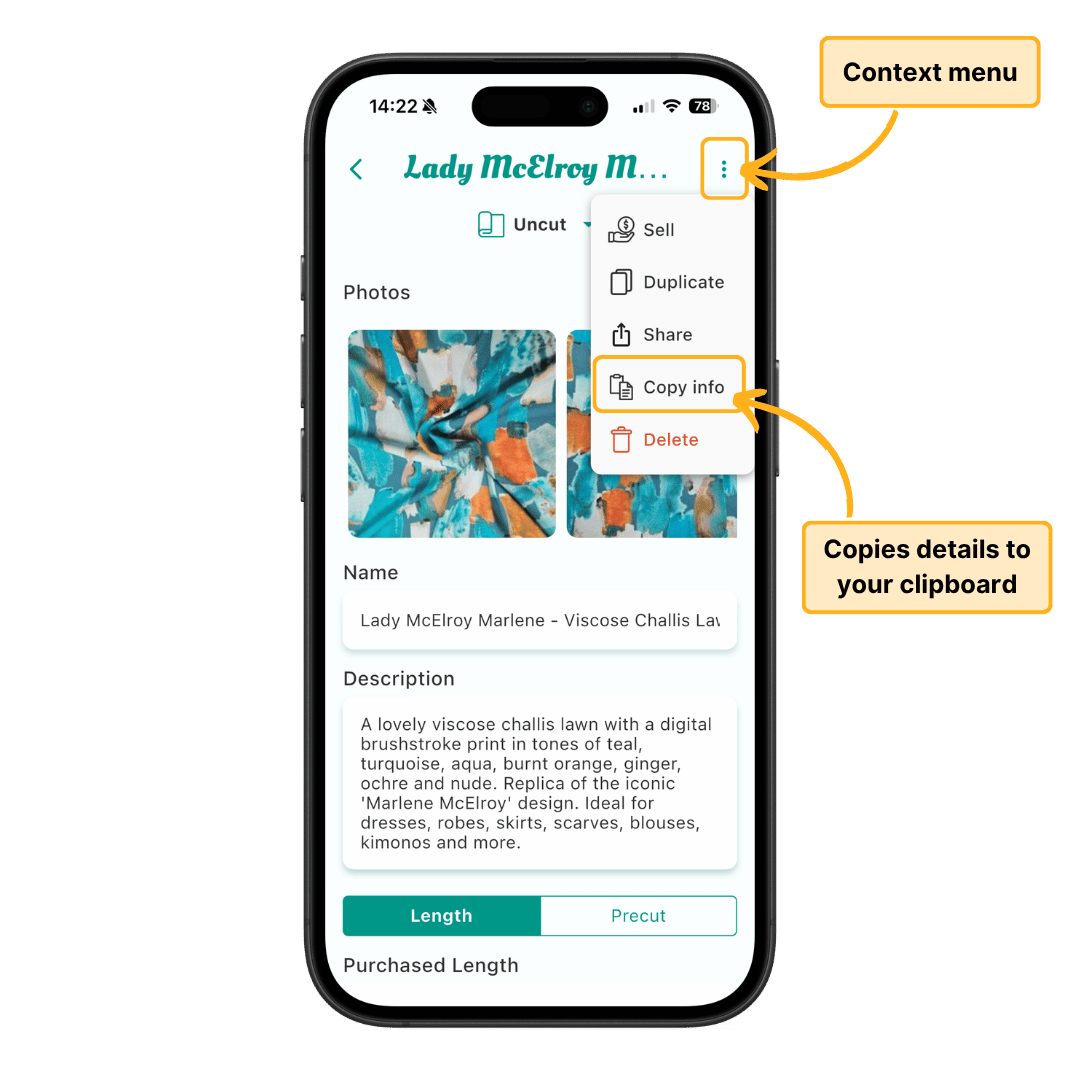
If your fabrics are already catalogued in Stash Hub, you can tap the three dots at the top right of a fabric record and select Copy to copy the key details to your clipboard. Then you can paste them straight into your listing description, saving you time writing everything out again.
Final tips for selling fabric online
Whichever platform you choose, the same basics apply: take clear photos, describe your fabric honestly, include measurements, and be upfront about any flaws. Buyers want to know what the fabric feels like, what it could be used for, and whether there’s enough for the project they have in mind.
Creating appealing listings will help your unwanted fabric find a new home where it will actually get used.