
Stash Hub Blog
Top Tips for Sewing Swaps
8 June 2026
At Stash Hub, our mission is to help you fall in love with your sewing stash, whether that means getting organised, rediscovering forgotten treasures, or finding new homes for the things you no longer need.
That’s why we love hosting and supporting sewing swap events. They are a brilliant way to bring the sewing community together, give unwanted fabrics and sewing supplies a second life, and make sewing more sustainable. They are also one of the easiest and quickest ways to clear space in your stash while picking up something new-to-you and inspiring.
Over the last few years, we’ve co-hosted and supported several sewing swaps in London and Surrey, including events with Olive Road London, Bornella Fabrics and Surrey Sews. Along the way, we’ve learned a lot about what makes a swap run smoothly, what to bring, what to expect, and how to make the most of the day.
Here are our top tips for sewing swaps, whether you’re attending one for the first time or thinking about hosting your own.
Top Tips for Attending a Sewing Swap
Swaps are the perfect opportunity to refresh your sewing stash by rehoming unwanted supplies and picking up new inspiration at the same time. Each swap will be different depending on how the host has decided to run it, but these tips will help you arrive prepared.
- Label your fabric with the length, width and content if you know it. This helps other swappers work out whether a piece will suit their project. You could try the Copy Info button in Stash Hub to share details directly from the app.
- Tie your fabric into a bundle. Use a ribbon or a fabric scrap to keep each piece together. This helps keep the tables neater and makes everything easier to browse.
- Only bring items that are clean and in good condition. Ask yourself whether someone else would realistically be able to use it.
- Don’t get carried away. Even though a swap is an opportunity to pick up great sewing supplies for free, be realistic and only take what you will actually use.
- You don’t have to commit until you leave. If you find something you love but you are not completely sure, carry it around for a bit. If you change your mind or find something you love even more, you can always pop it back on the appropriate table for someone else to discover.
- Stick around. People may arrive at different times and everyone will bring different things to the table, literally. Your dream fabric might arrive later on, so revisit the tables to see what’s new.
- Get social. Swaps are a great opportunity to make new sewing friends, so don’t be afraid to strike up a conversation. Share the gems you’ve picked up, ask for suggestions on what you could make, and admire all the amazing handmade outfits people are wearing.
How to Host a Sewing Swap
Hosting your own sewing swap can be a brilliant way to bring your local sewing community together, help people clear out supplies they no longer need, and give fabrics, patterns and notions a new home.
Choose the Right Venue
The first thing to think about is your venue. This could be a local community centre, church hall, school hall, craft space or anywhere else that has enough room for people to browse comfortably.
Have a look at what is available nearby and think about practical things like accessibility, parking and public transport links. The size of the space will affect how many people you can invite, and the hire cost will also need to be factored into your ticket price.
Decide How Tickets Will Work
Next, decide how you want to handle tickets. It is completely up to you how much you charge and how many places you offer.
Online ticketing platforms such as Eventbrite and TicketTailor make it easy to sell tickets in advance, but make sure you factor platform fees into your costs. Decide in advance whether you plan to sell tickets on the door. If you do, you may need a cash float so you can give change.
Set Up Clear Swap Tables
When it comes to setting up on the day, it helps to choose a venue that can provide tables. We organised our swaps with different tables for different lengths of fabric, which made it much easier for people to browse.
We also asked everyone to label what they brought with useful information like measurements and fibre type. To keep things simple, we didn’t use tokens or have a separate drop-off period. People just brought what they wanted to swap and took what they wanted to use.
Make It Social
Providing refreshments can really help boost the social aspect of the swap. You may be able to offer tea and coffee if your venue has kitchen access, or consider whether there is a nearby cafe you could direct swappers to.
Having somewhere to pause gives people a chance to chat to fellow creatives and come back re-energised for another round of swapping.
Plan What Happens Afterwards
Finally, have a plan for what happens after the swap. You are very likely to have some items left over at the end, so it is worth thinking about this in advance.
Could scraps go to a textile recycling or waste scheme? Some fabric shops may have access to industrial textile waste solutions, or you could check with your local council recycling centre. It is also worth looking for local charities, women’s centres, refugee centres, community sewing groups or creative projects that might be able to make good use of leftover fabric, patterns and supplies.
Lessons from Previous Swaps
At the Surrey Sews swap in November 2023, Yvette and Mel helped bring local sewists together to share supplies and support the community. At the London Destash Fabric Swap with Olive Road London in January 2024, the event saved kilos of fabric from landfill and any remaining textiles were recycled by First Mile.
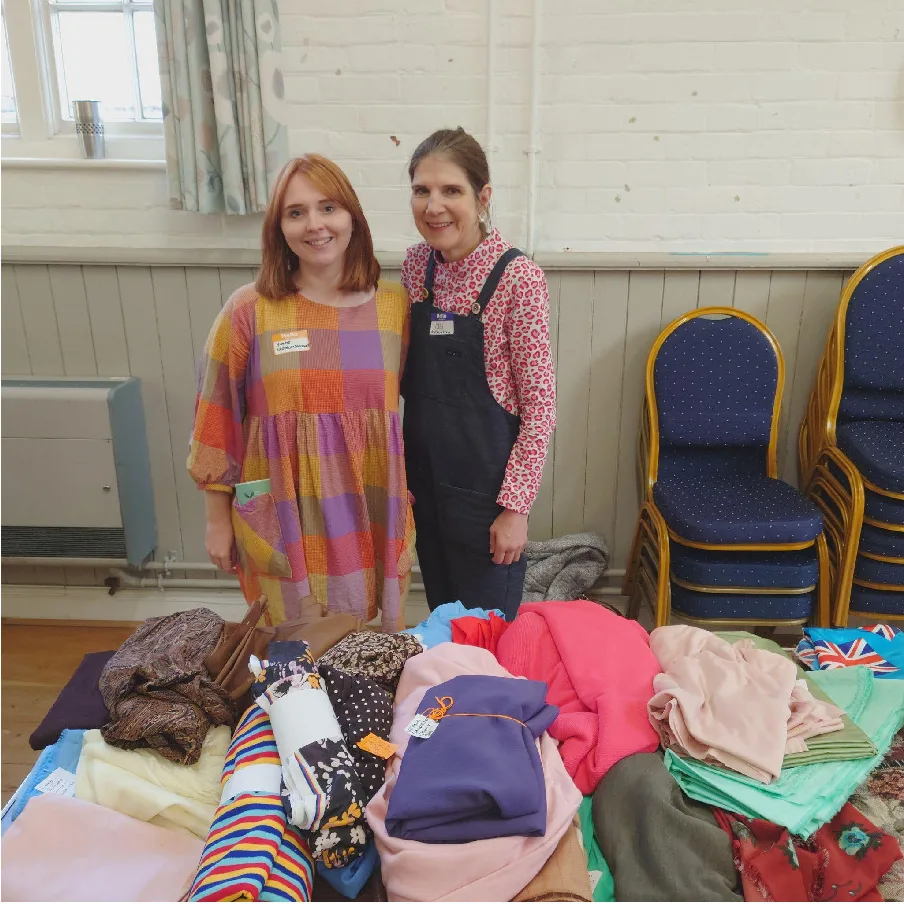
Yvette and Mel hosting the Surrey Sews swap in November 2023
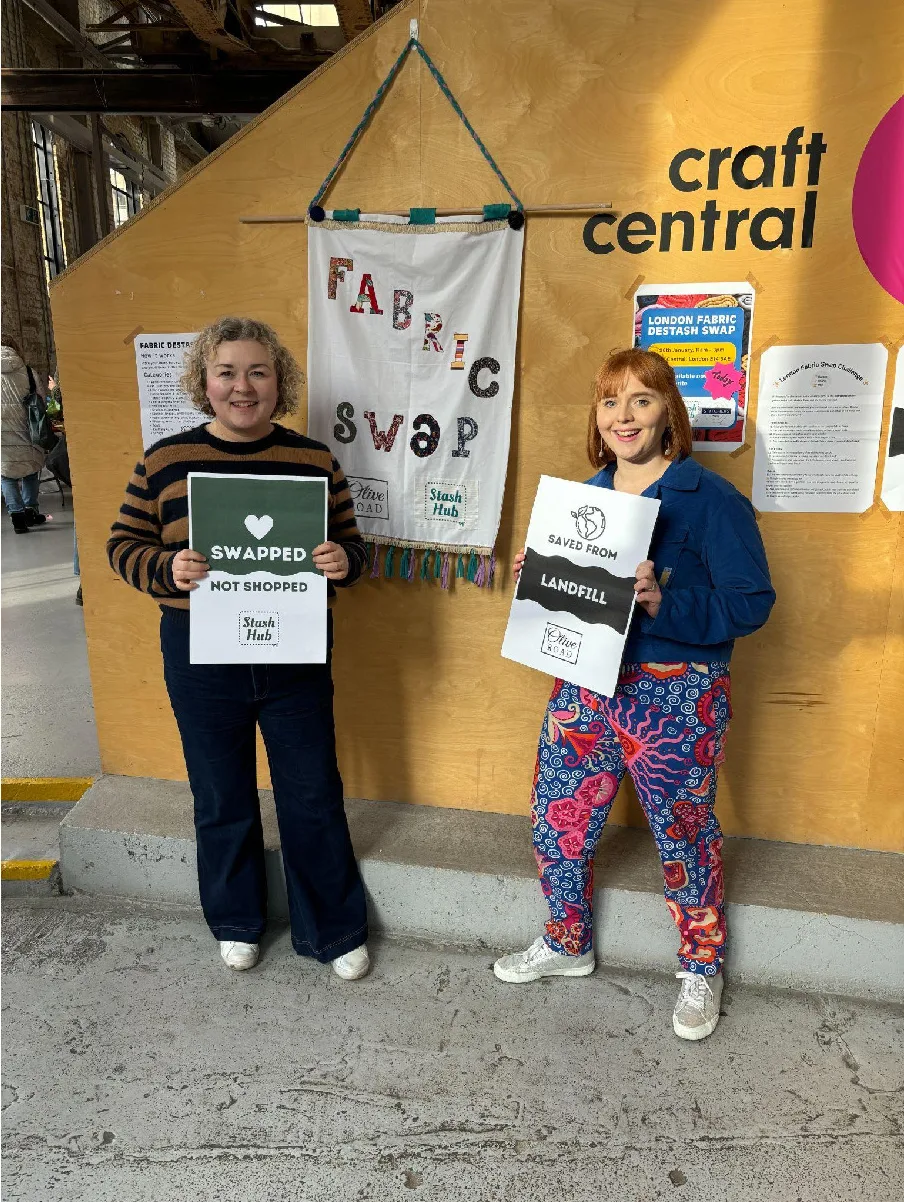
Yvette hosting the London Destash Fabric Swap with Olive Road London in January 2024
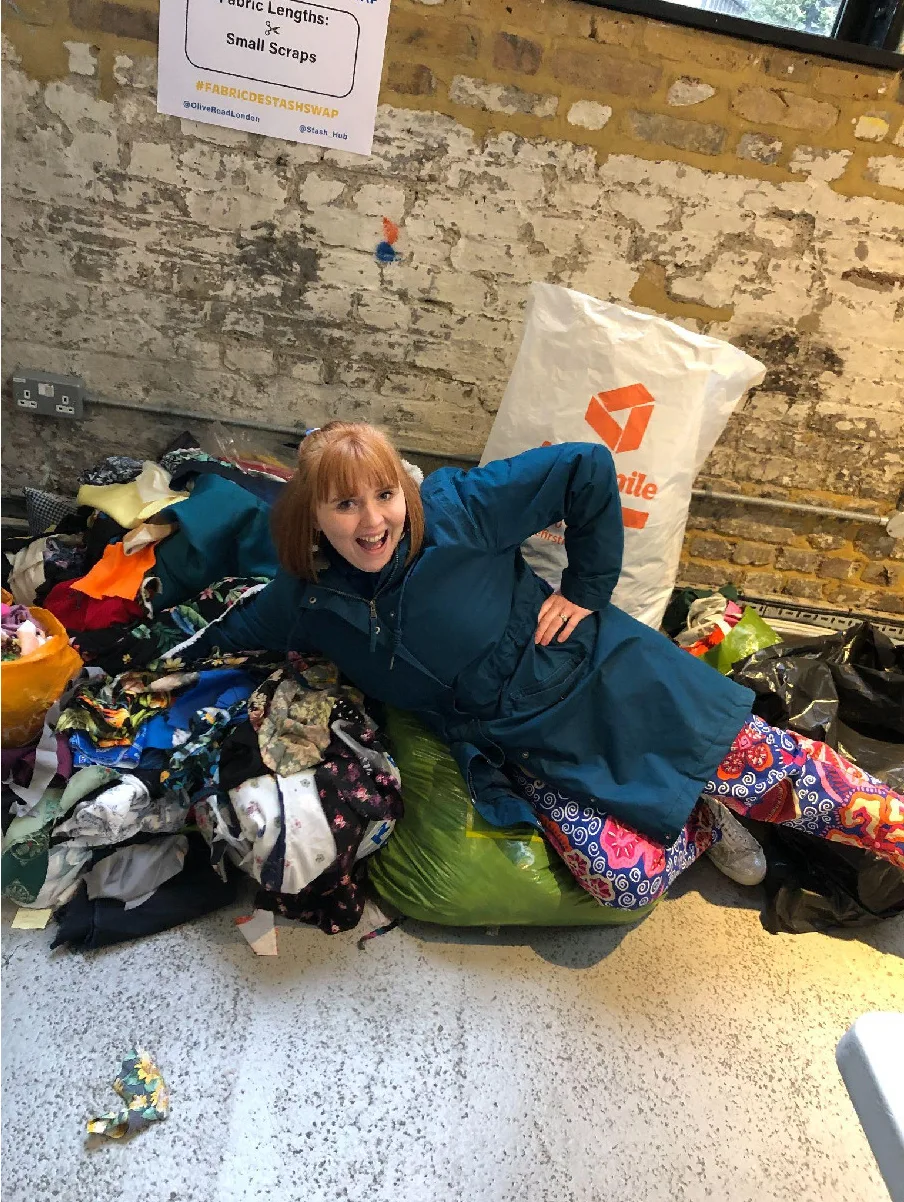
The swap saved kilos of fabric from landfill and any remaining textiles were recycled by First Mile
At the Surrey Sews November 2024 swap, labelled fabrics tied into bundles kept the swap tables tidy and easy to browse. At the swap hosted with Bornella Fabrics in September 2025, organising fabric by length made it much quicker for swappers to find pieces that could work for their next project.
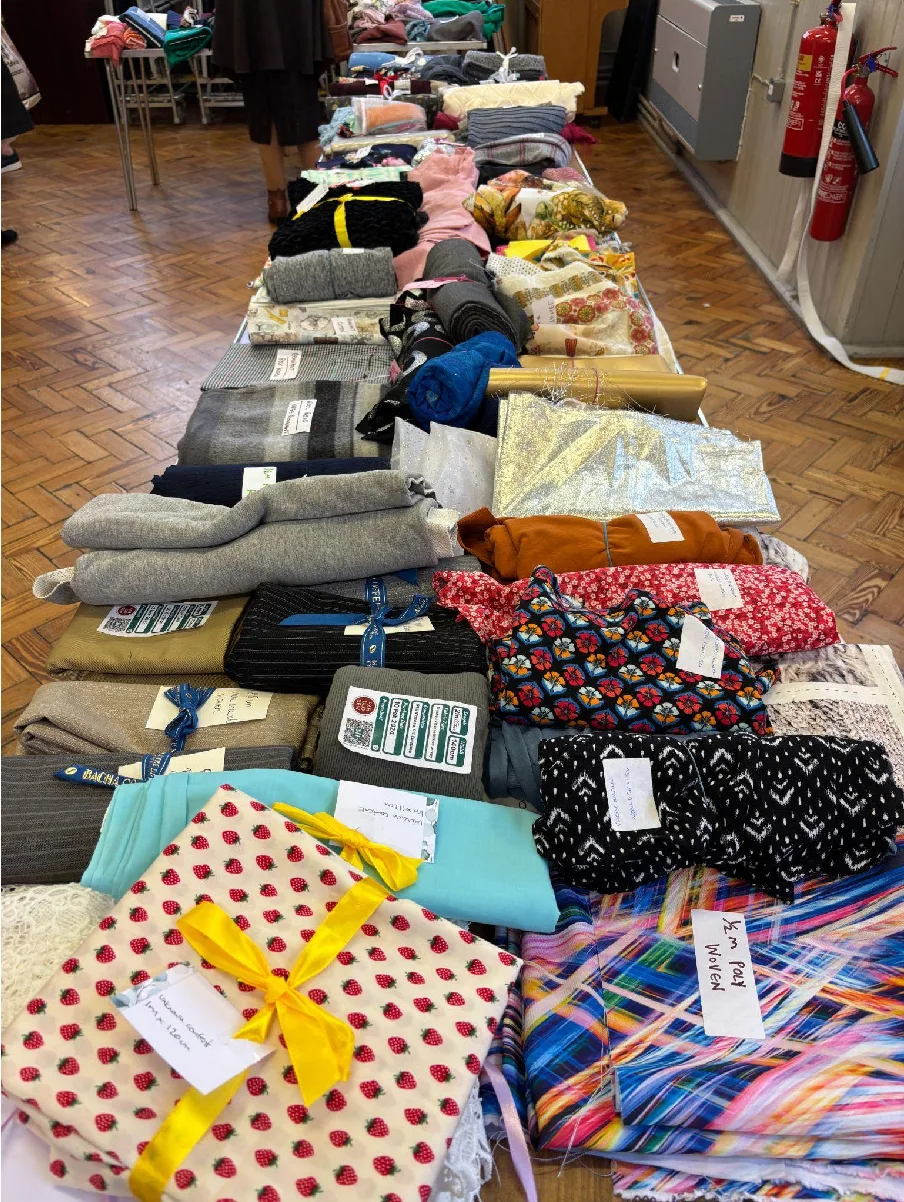
Fabrics labelled and tied into bundles kept swap tables tidy at the Surrey Sews November 2024 swap
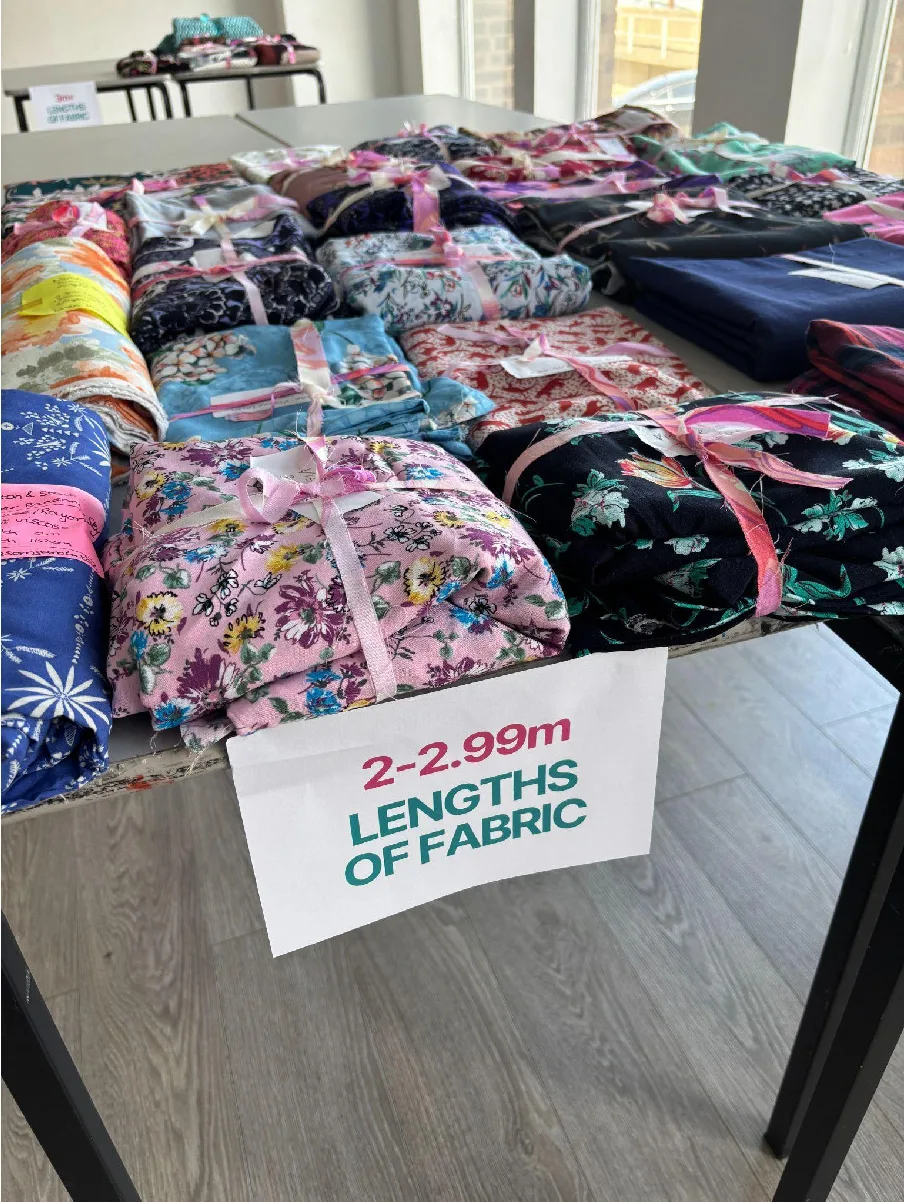
Fabric organised by length at the swap hosted with Bornella Fabrics in September 2025
Small details like labelling, bundling and table organisation make a huge difference. They help people feel confident choosing fabric, make the room easier to navigate, and give more supplies the best possible chance of finding a new home.
Ready to Refresh Your Stash?
Whether you are attending or hosting, sewing swaps are a joyful way to clear space, meet other sewists and keep useful materials in circulation. If your stash is starting to feel overwhelming, a swap could be the perfect motivation to sort through your fabric and decide what you are ready to pass on.
For more ideas on rehoming supplies, read our guide to destashing fabric and sewing supplies.